School Council
School Councillors 2026 - 27

Why do we have a School Council?
The School’s Council is an ideal opportunity for children to get more involved in the way the school is run. We respect and value the thoughts and opinions of our children and whilst it may not always be possible or practical to do everything they suggest; the children do have some fantastic ideas.
The School Council benefits the whole school, children and teachers because it provides opportunities for pupils to communicate their feelings as well as influence decisions that are made within school.
Councillors develop skills such as confidence, communication and negotiation. It is the responsibility of each Councillor to ensure that they express both their own views and the views of all the other children in their class. We want to encourage our children to respect the fundamental British values of democracy, the rule of law, individual liberty and mutual respect and tolerance of those of different faiths and beliefs.
Who would make a good school councillor?
Any child in the school can stand to be a school council representative for their class. It is not a decision made by teachers but by the children. A good school councillor does need to have some of the following qualities though:
- A good listener and speaker
- Friendly character
- A team player
- Keen to make a contribution to improving our school
- Able to represent the views of others
- Willing to give up some of their time
- Has lots of good ideas
- Sets a good example to others
- Good communicator
Who can be a member of the school council?
Anyone! We have a School Council with boys and girls representing their classes from each Reception up to Year 6.
Each councillor is elected by their class at the beginning of each term after a short speech explaining why they should be elected. This develops children’s understanding of one of British values: democracy. They also understand that with democracy comes responsibility.
What do we do?
Members of the Council take part in discussions and votes and also feedback any relevant information to their class. At times, they are requested to ask their class for ideas or take class votes relating to discussions by the Council.
Poppy Day November 2025
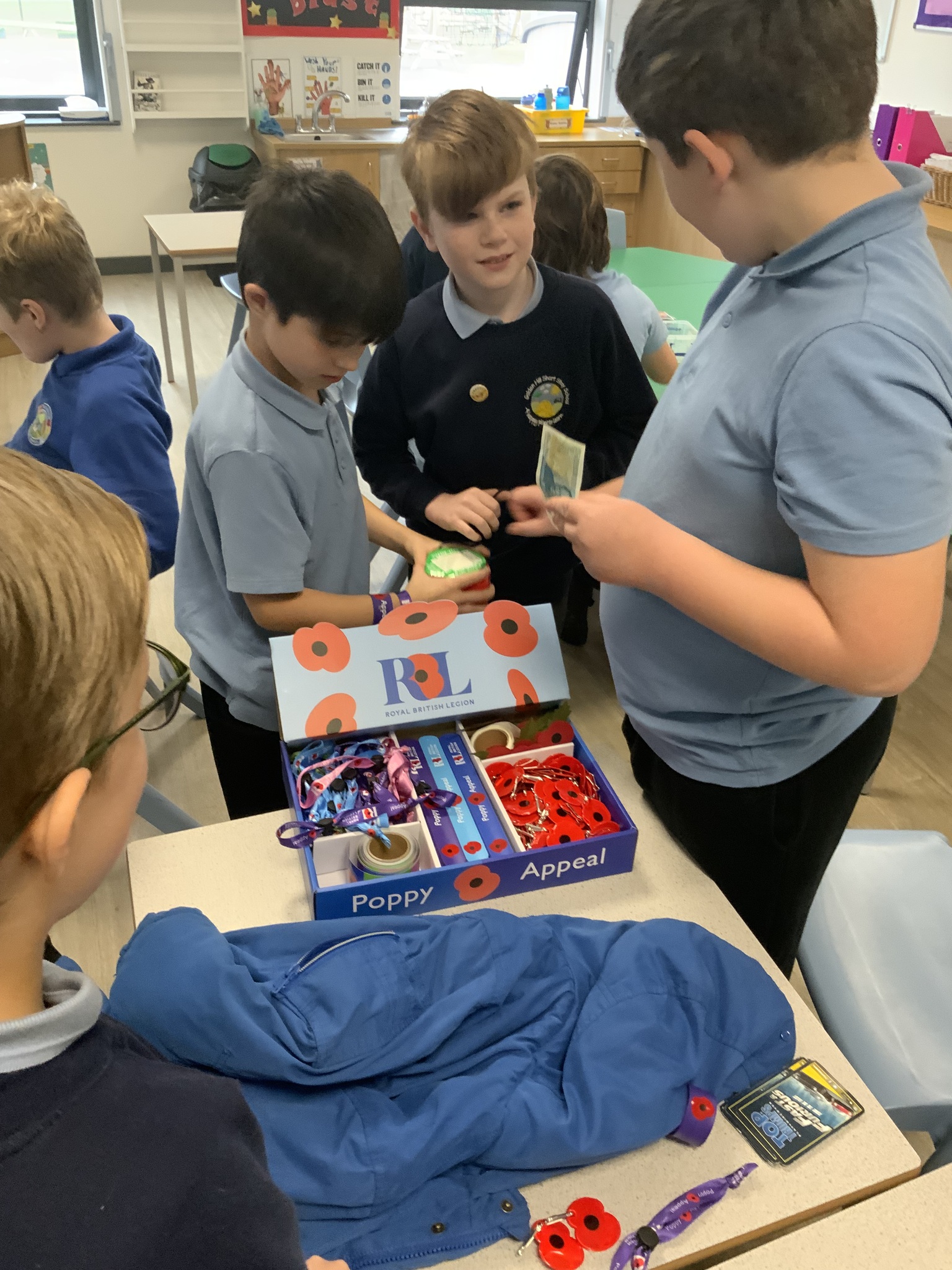
The school council organised the poppy appeal sale in school, going to each class every morning selling wristbands, stickers and zip reflectors. All the money collected has gone to the Royal British Legion which supports serving personnel, veterans, and their families through financial aid, advice services, employment support, and mental health assistance.
During November, the school council decided we should hold a non-uniform day with donations going to the Children In Need appeal. They raised an impressive £106.75.